




Find, save and share Public Notices that affect you in the area.
Search the Public Notice Portal What is the Public Notice Portal?What is the Public Notice Portal?
The Public Notice Portal carries statutory public notices published in local newspapers and is the fastest and most effective way of finding out what is happening in YOUR neighbourhood.
Search the Public Notice PortalSomerset Council risks "kicking the legs out" from affordable housing projects if it pushes for more health funding, a councillor has warned.
When a new housing development is approved, the council signs a legal agreement with the developer (known as a Section 106 agreement) to secure financial contributions towards local services - including funding to either build new GP surgeries or to expand existing ones.
The amount developers should contribute towards local health services is determined by a formula used by NHS Somerset, which takes into account the capacity of the surgeries nearest the site and the number of additional patients any new estate is expected to create.
Liz Browne from Bridgwater Without Parish Council criticised the level of funding secured in late-November, claiming that Somerset Council and NHS Somerset were "allowing developers to get out of their financial contribution obligations" due to viability concerns.
But Councillor Sarah Wakefield, portfolio holder for adults services, housing and homelessness, has offered a different view, saying Somerset will miss out on much-needed affordable homes if more money is sought for GP surgeries.

Mrs Wakefield represents the Blackdown and Neroche division, which includes numerous villages near Taunton and Wellington, along with a sizeable portion of the Blackdown Hills national landscape (formerly area of outstanding natural beauty, or AONB).
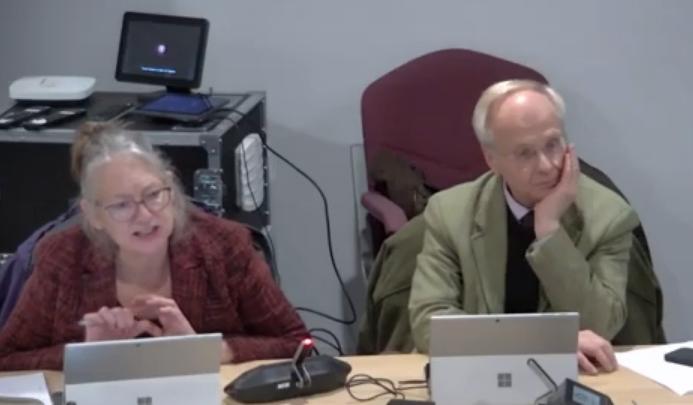
She made her comments when the council's planning and transport policy executive sub-committee met in Taunton to discuss the NHS guidance on Wednesday afternoon (December 10).
She said: "I've got quite a lot of councillors, as my fellow Lib Dems will know saying: 'you’re building lot of developments and you're not putting any GP surgeries in them'.
"The more claims you make on the developer, the less affordable homes you are going to get. We need to be a bit careful how we do this.
"What you normally end up doing is kicking the legs out from underneath the affordable housing by all the other contributions for all the other things - and the developer will say: 'Well, I do all those things, but I can't afford to do the affordable housing any more, so we'll just cut that back or get rid of it'.
Read more
"That is our big problem in Somerset and across the country.
"We do need more GPs if we're going to have big housing estates being built, but it could take away from other things."
Planning officer Andre Sestini responded: "That is still within the decision-making of the council.
"There will be some cases where you can’t justify a Section 106 contribution because there is sufficient demand - though there are probably not many of those now."
Councillor Mike Rigby, portfolio holder for economic development, planning and assets, said that GP funding was "a big black spot in the public mind" and advised officers to provide an accessible breakdown of this information for residents.

Mr Rigby (who represents the Lydeard division near Taunton) said: "It's a very frequently asked question. People say they don't mind having new houses, but it's already very difficult to get a doctors' appointment.
"If we were to produce something very simple, just to explain what how we calculate that needs and how it is then provided, that would probably be of interest to all members and the wider public."
NHS contributions from housing developers can only be used for capital projects (such as building new GP surgeries or expanding existing ones) rather than revenue spending (such as paying the salaries of doctors and nurses).
Councillor Helen Kay (Green, Frome East) added: "We've got a fantastic, quite new surgery which has capacity for probably another 10,000 people - but they don't have the funds to get the doctors.
"So we still have people not able to get an appointment, and when we have applications for 2,000 more houses that becomes a big problem.

"The local surgery and the NHS write back to the council and say they’re not requesting anything.
"If we had CIL instead of Section 106, could we get around that?"
While Section 106 funding is restricted to the site of a given development and areas in close proximity, funds raised from the community infrastructure levy (CIL) can be pooled from numerous developments across Somerset and spent anywhere.
Kate Murdoch, the council’s service manager for planning policy and implementation, replied: "CIL is for infrastructure only - you can use the money to expand the surgery to provide space for doctors or nurses, but it's not for providing revenue funding for additional staff.
"That money comes from the NHS and it's linked to how many patients a given surgery covers. This is not an issue unique to Somerset."
Alison Blom-Cooper, the council's chief planning officer, added: "There's only one cake, and how you slice it up doesn't really depend on whether the funding is from Section 106 or CIL."


Share