



The average Somerset council tax bill will increase by nearly £122 a year from April after Somerset Council set its annual budget.
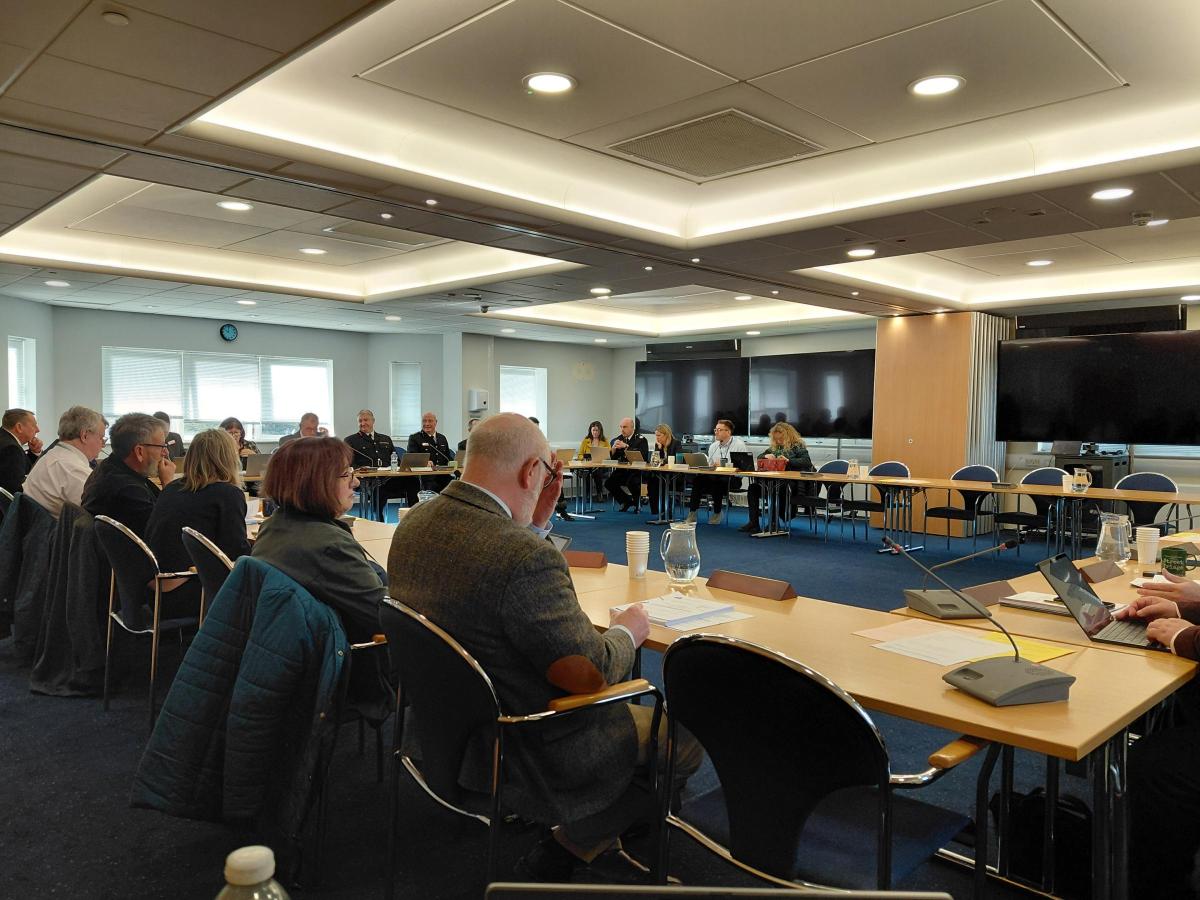
The council set its budget at a day-long full council meeting in Bridgwater on Wednesday (March 4), with councillors voting to increase its share of council tax bills by 4.99 per cent - the maximum allowed without triggering a local referendum.
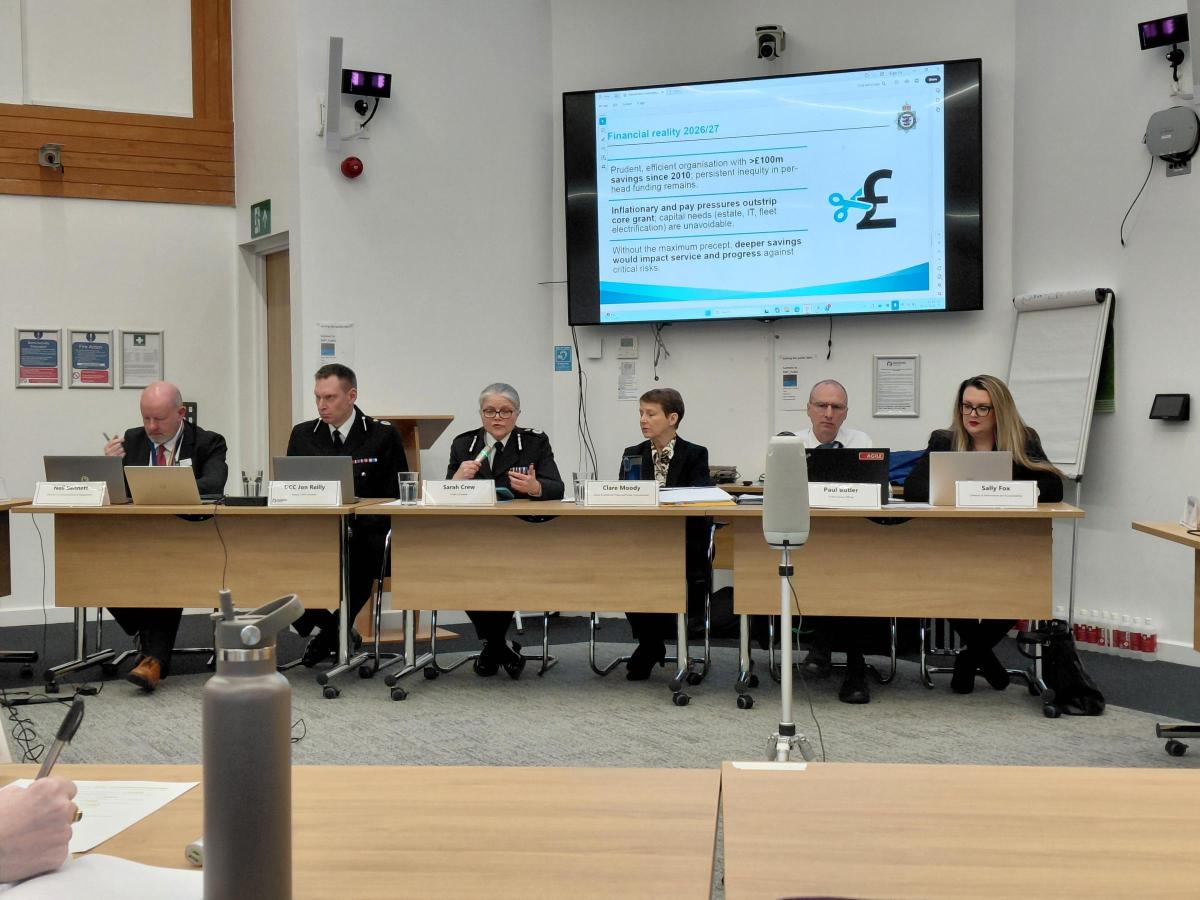
Both Avon and Somerset Constabulary and Devon and Somerset Fire Rescue Service set their annual budgets in February, with their share of the average council tax bill rising by £15 and £5 per year respectively.
Most of Somerset's town and parish councils have now set their annual budgets, with Somerset Council providing an estimate of the average annual increase in council tax as part of its budget papers.
Taken together, households across Somerset will see their annual bills rise by an average of £121.97 - the equivalent of an extra £2.34 per week, or around the cost of a two-litre bottle of milk.
Here's everything you need to know:
What is an average council tax bill?

Council tax is calculated on the basis of property values from 1991, with homes being categorised into one of eight bands.
Band A is the lowest band (covering one-bedroom flats and similar properties) and Band H is currently the highest (such as big country houses) - though the largest properties in the UK will be hit by a new 'mansion tax' from April 2028.
Council tax bills take Band D as an average - though in practice many households will pay less than this, since Somerset has relatively few Band D properties compared to other parts of the UK.
Where does my council tax go?

Council tax is split between four main bodies: Somerset Council, Avon and Somerset Constabulary, Devon and Somerset Fire and Rescue Service, and your local town or parish council.
The South West Ambulance Service receives its funding directly from central government, much like the Somerset NHS Foundation Trust (which runs the county's hospitals).
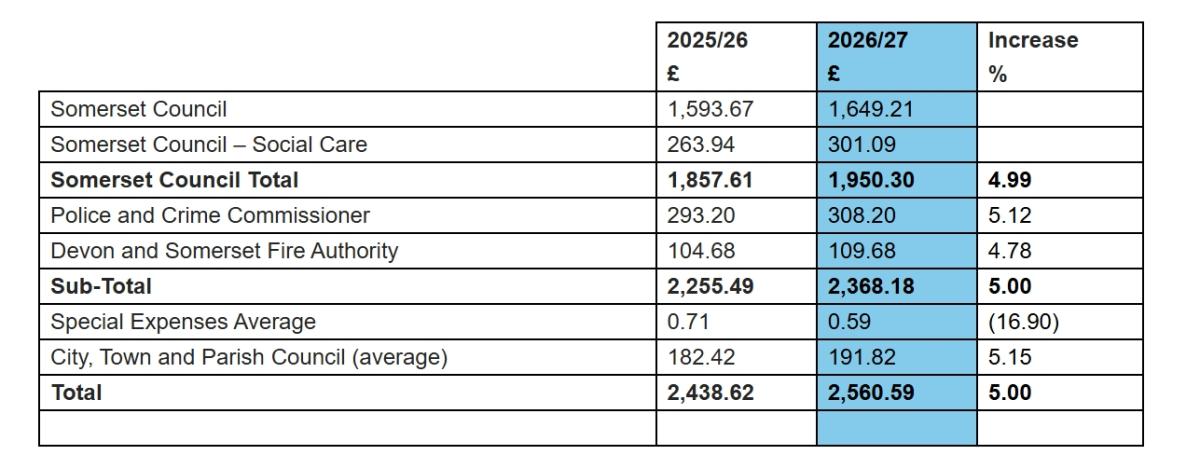
Somerset Council gets the lion's share of council tax, with its share of a Band D bill rising from £1,857.61 in 2025/26 to £1,950.30 for 2026/27 - an increase of 4.99 per cent.
Of this 4.99 per cent, two per cent has to be spent on adult social care, while the other 2.99 per cent is split between all other services - ranging from bin collections and road repairs to processing planning applications and looking after parks.
Avon and Somerset Constabulary's share of a Band D bill will rise from £293.20 to £308.20 - a rise of £15, or 5.12 per cent.
Read more
Devon and Somerset Fire and Rescue Service will see its share of a Band D bill rise from £104.68 to £109.68 - a rise of £5, or 4.78 per cent.
Finally, there is the portion for town and parish councils (all 272 of them), which covers more locally specific services such as grass cutting, emptying dog poo bins and providing benches in public places.
The average town and parish council will see its share of a Band D bill rise from £182.42 to £191.82 - a rise of 5.15 per cent.
However, town and parish councils have no cap on how much they can increase their bills by year on year - so the actual rise may vary greatly from settlement to settlement.
On average, the total annual bill for a Band D property will rise from £2,438.62 to £2,560.59 - a rise of £121.97, or five per cent.
What are "special expenses"?

Special expenses are not additional remuneration for local councillors, or a crafty means of covering travel costs in remote areas.
Instead, they mainly relate to the cost of looking after closed churchyards in the former Mendip and South Somerset areas - a responsibility which falls to local authorities rather than the Church of England.
On average, the special expenses portion of the average council tax bill has actually fallen from 71p to 59p - a drop of 16.8 per cent.
What about the Somerset Rivers Authority?

The Somerset Rivers Authority (SRA) was created in 2015 in the aftermath of severe local flooding across Somerset.
The authority has an annual budget of more than £3m, which it spend on flood prevention on top of routine work carried out by the Environment Agency (EA), Somerset Council's highways team and the Somerset Drainage Boards Consortium.
These projects range from major dredging and improvements to significant flood relief channels (like the King's Sedgemoor Drain near Bridgwater) to more local interventions, such as tree planting and leaky dams to 'slow the flow' of water running off land into residential areas.
The SRA cannot raise its own precept - and efforts to change this in parliament through a private member's bill ultimately came to nought.
Instead, the SRA takes its annual budget from Somerset Council's share of council tax - meaning it does not show up as a separate line on your council tax bill.
What can I do if I'm struggling to pay?

The easiest way to pay council tax is by direct debit, with Somerset Council offering residents the option of paying in either ten monthly instalments or 12.
Some discounts are available if you meet certain criteria - for instance, if you live alone, if you are supporting any children or dependants, or if your weekly income is below a certain level.
A full guide to council tax support available in Somerset is available via www.somerset.gov.uk/benefits-and-payments/council-tax-reduction.
The council is currently reviewing the level of support it provides to residents as it struggles to balance the need to help vulnerable residents with the overriding aim of setting a sustainable budget.
Major changes are unlikely to come into force until April 2027, after the next annual budget.
These changes may be strongly influenced by the outcome of an ongoing judicial review related to support for those on universal credit.
What do the taxpayers have to say?
By Benjamin O'Brien
There was a mixed reaction from locals when asked about the confirmed rise in council tax, which Somerset Council will increase by 4.99 per cent for 2026/27.
Nickie Cooksley, who lives in Taunton and works in the education sector, questioned the fairness of the rise.
She said: "What are we paying for? No services have gotten any better, but they insist on putting taxes up. It’s good that they do a bit of tarmacking here and there, but what about the rest of it?
"And what are the councillors doing to earn their money? They’re picking up big wage packets, but what are they actually doing for it?”
Nickie Norris, also of Taunton, told the Gazette: “For me, it’s the buses. It’s potluck if you even get one."
She added: "And as for the roads, my husband’s just ruined a tyre driving through a pothole by the Ruishton Inn. And you could never go down there on a bike – if it’s raining and there’s water in there, you’ll break your neck."
Ella, also from Taunton, questioned the increase. She said: “My council tax has gone from £120 to nearly £180, but I don’t see why. Everything is rising, but our incomes aren’t going up.”
She suggested that the council could do more to publicise what council tax is used for.
Ella added: "You’re not really educated on where it goes, so you just think you’re paying tax for no reason."


Share