




Health campaigners say the planned closure of some Yeovil Hospital stroke services "has to be stopped" to protect patients.
The NHS Somerset integrated care board (ICB) voted in late January 2024 to approve plans to remove the hospital’s hyper-acute stroke unit (HASU), meaning the most urgent stroke patients will be transported to either Dorchester or Taunton for treatment.
The move has attracted considerable criticism from local residents, with both Yeovil MP Adam Dance and Yeovil Town Council trying and failing to get the Department for Health and Social Care (DHSC) to 'call in' and review the decision.
Campaigners and members of Somerset Council's adults and health scrutiny committee have both raised fears that the change will lead to worse outcomes for patients, citing lengthy wait times for ambulances.
NHS bosses have said every effort was being made to improve ambulance response times and to ensure the new facilities were up to standard before the change takes effect later in the year.

Stroke services are categorised by the NHS into two camps – hyper-acute (where emergency treatment is required within the first 72 hours) and acute (where the stroke is less life-threatening).
Under the agreed reforms, Yeovil will retain its acute stroke provision (within its acute stroke unit, or ASU), but all hyper-acute stroke patients will be transported to either Musgrove Park Hospital in Taunton or Dorset County Hospital in Dorchester, whichever is closer.
Work on the initial improvements at Musgrove will be completed by late-May, with additional work being completed by the end of August.
Building work is currently under way at Dorchester to create its HASU, which will be completed in June.
At Yeovil, the existing ASU will be relocated to level nine of the hospital (which was originally the psychiatric ward until the Summerlands site opened in the 1980s), with "an enhanced rehabilitation environment" including a larger therapy gym and a communal kitchen.

The new service will officially 'go live' in September, with existing patient transport services being adapted to ensure people admitted to a given HASU can continue their long-term recovery nearer to home.
Ray Tostevin from the Quicksilver Community Group told the adults and health scrutiny committee in Bridgwater on Thursday (May 14) that the new system would put patients at risk without drastic improvements in ambulance response times.
He said: "We believe that the pending closure of the HASU will be a very grave mistake.
"We have looked at ambulance response times, and all the things that are happening at Musgrove, Yeovil and Dorchester will come to nothing if we cannot improve this. It's the elephant in the room.
"Without addressing that, all the mitigation about bringing better care will not happen.
Read more
"We see a failure to implement, fully test out and embed all the mitigations surrounding additional travel time as a further massive risk to patient safety and their overall outcomes.
"The closure of the Yeovil HASU has to be stopped to prevent the implementation of a flawed decision. The current focus of activity should be not on finding ways to close the HASU in Yeovil, but to improve it.
"I want to see fantastic stroke services in my county, where I’ve lived for 35 years. I want to see our health teams succeed - but closing our HASU is not the way to do that."
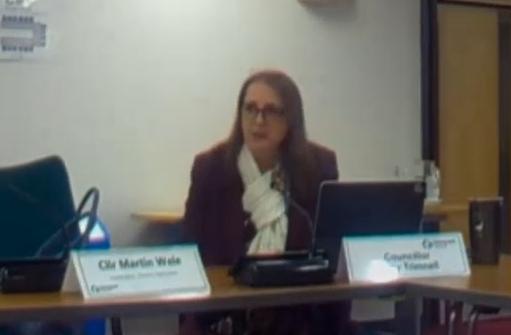
Councillor Lucy Trimnell (Conservative, Wincanton and Bruton) said she shared campaigners' concerns, citing comments from an NHS consultant living in her division.
She said: "I was talking to one of my parish councils about this the other day. One of the people in attendance was a consultant pathologist, who said: 'I would put my wife in my car and I would drive her there - I wouldn't wait for an ambulance.'

"There is a lack of trust in the ambulance service, and in the road conditions - today [May 14] two of us were late coming from Wincanton and Bruton due to traffic problems, and we left in plenty of time.
"The motivating issue for this was the lack of specialists, and the idea that we cannot get people to work here.
"We need to fight against just saying: 'nobody wants to come and work in Somerset'. It's true, my son is a doctor, and he doesn’t want to come back from the Manchester area where he is now, but he's only one person.
"Is anyone trying to find out why we are unable to attract doctors, dentists and other professionals into this area to work? We've got a whole part of Somerset that is feeling as though they are going to have reduced access to services at a time of life when they most need it."
Dr Rob Whiting, a consultant stroke physician at Musgrove, responded: "The ambulance service is doing its best to reduce the time needed to get people to hospital. You can see that in their performance indicators."

Strokes are categorised as a 'category two' emergency by the South West Ambulance Service NHS Foundation Trust (SWASFT), with the average response time to 'category two' call-outs being 30 minutes.
Chris Turner, SWASFT's area head of ambulance operations in Somerset, said: "You should absolutely call an ambulance in a medical emergency.
"We can do intervention treatment and various other elements to prepare the patient ready for emergency department arrival.
"Strokes fall into category two response, where you get an ambulance and it doesn't go through the triage process.
"Our average response time at the moment in Somerset is around the 30-minute mark. We are aiming to get to 27 minutes, but that is a work in progress - and that is an average across the county over a period of a month."


Share