




Somerset Council has rejected claims by Reform UK that future devolution will lead to another "tax grab" by the local authority.
The council has been closely involved in discussions with central government about creating a Wessex regional authority, which would see closer, more strategic co-operation with its fellow councils in Wilshire, Dorset, and Bournemouth, Christchurch and Poole.
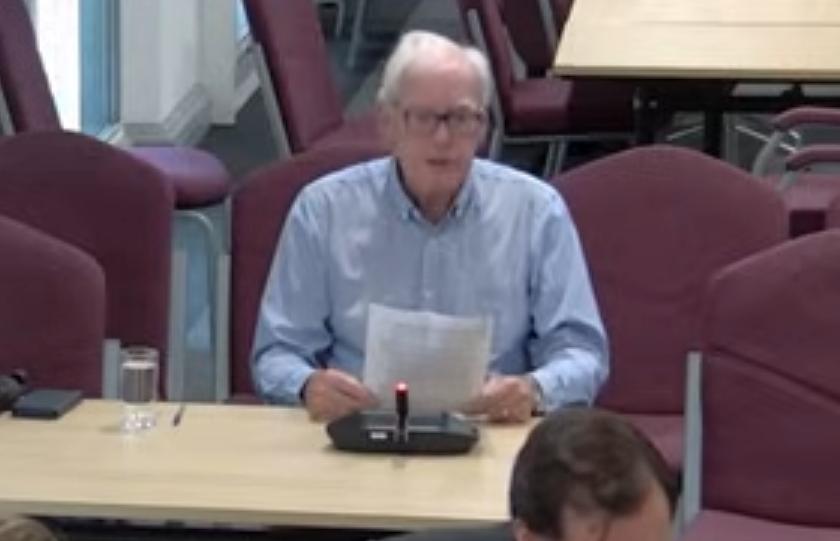
Chris Mann, a prominent figure among Reform UK's Somerset supporters, delivered a stinging attack on the council's record at a recent meeting, claiming its creation in April 2023 had been done "without a merger plan" and slamming its precarious financial position.
The council said that a phased transition of services was normal for an authority of this size, and clarified that any new mayoral authority would not lead to further "mergers" or any kind of democratic deficit.
Mr Mann delivered his speech at the beginning of a lengthy meeting of the council's executive committee in Taunton on September 2.

He said: "After five statutory recommendations [from auditors], a one-star rating for weak financial management [from CIPFA], a poor CQC report, £91m lost on commercial investments, and now a ministerial 'best value judgment' expressing significant concern, residents are entitled to ask: what has gone wrong at Somerset Council?
"They may also question the council leadership’s enthusiasm for devolution to a Wessex mayoralty which may be seen as another layer of government - and another tax grab.
"The council has spent £40m on temporary and agency staff, £19m on consultancy, £40m in debt interest and has £16m in uncollected council tax.
"These are enormous sums which, with a questionable £53m of savings last year and a £30m projected overspend already this year, invite serious questions about Liberal Democrat stewardship.
"How can you claim 'best value' after spending £12m on pay-offs for 49 experienced senior officers and 152 other staff, before knowing which jobs would actually be needed?
Read more
"How can you claim 'best value' when, after two statutory recommendations, another 300 staff were hurriedly let go to save £33m, still without a merger plan?
"After all this time, when will residents finally see the savings they are due?"
Council deputy leader Liz Leyshon described Mr Mann's question as "intensely political" and defended the pace and manner in which the new unitary authority had been implemented.
Ms Leyshon (who represents the Street division) said: "I was one of the members who sat in every service alignment meeting, that considered every part of the services this council delivered - other than adults' services and children's services, because they continued on the county-wide boundary.
"I know how much work was done to achieve the merger of the five councils.

"Wessex and regional devolution is not a merger. It is an important development of four already unitary councils, working in response to the government's priority.
"I heard from another similarly large unitary council that it took nine years for it to reach a stable position [after reorganisation] - and that came at a time when that particular council had no particular financial challenges.
"Local government reorganisation and the associated savings was predominantly based on removing and reducing duplication of staffing. The One Somerset business case made that extremely clear."


Share