



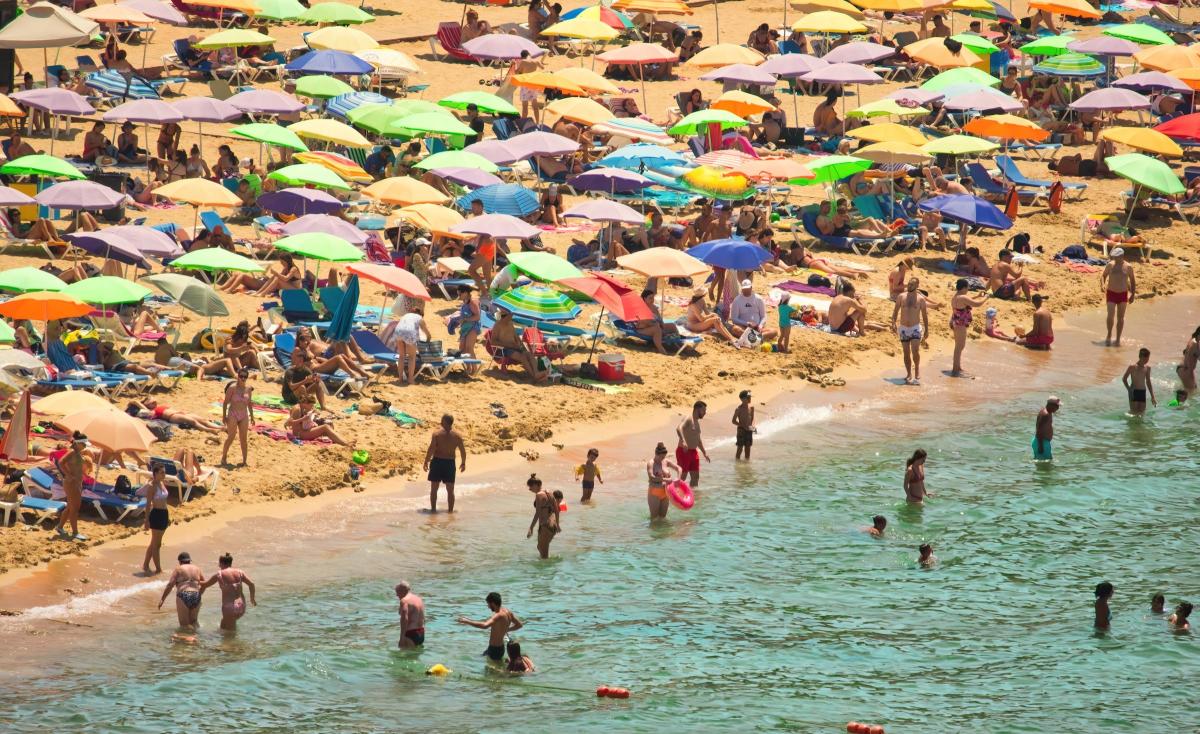

Brits travelling abroad this summer are being warned of potentially fatal "flesh-rotting" bacteria on European beaches.
A recent heatwave in Europe has seen temperatures climb above 40C.
Provisional figures suggest the extreme conditions have led to more than 2,000 deaths in Spain and France.
The UK Foreign, Commonwealth & Development Office (FCDO) has updated its travel advice, warning visitors to take extra care when swimming in the sea and/or pools.
Brits warned of "flesh-rotting" bacteria on European beaches
Now, British holidaymakers are being warned of "flesh-rotting" bacteria on European beaches, according to Euronews.
The news outlet said: "Particular concern centres on the Vibrio bacterium, a family of naturally occurring microorganisms found in warm, brackish coastal waters."
What is Vibrio bacterium, and is it dangerous?
Vibrio bacteria are most commonly found in coastal waters during May and October when water temperatures are warmer, the Centers for Disease Control and Prevention (CDC) explains.
Most strains are "harmless", but some, including the "flesh-rotting" Vibrio vulnificus, can cause severe and even fatal infections (in rare cases).
People can be infected through open wounds or contaminated seafood.

In severe cases, Vibrio infections can cause necrotising fasciitis, in which tissue rapidly breaks down.
While most cases are mild, the bacterium can enter the bloodstream and cause sepsis, sometimes leading to amputation or death.
Symptoms of Vibrio infection
Symptoms of Vibrio infection, according to the CDC, include:
- Watery diarrhea
- Stomach cramps
- Nausea
- Vomiting
- Fever
- Chills
- Dangerously low blood pressure
- Blistering skin lesions
- Swelling
- Discolouration (turning a colour other than normal)
- Discharge (leaking fluids)
Is there Vibrio bacterium in UK waters?
Rising temperatures are causing an increase in cases of Vibrio bacteria in UK waters, according to research from the University of Exeter and the University of Portsmouth back in 2022.
Researchers said the spread of Vibrio species has resulted in a "worldwide surge" of Vibriosis infections in humans and aquatic animals.
UK Foreign Office updates travel advice for Spain
The UK Foreign Office is warning visitors to take extra care when swimming in the sea or pools, as "every year, people drown in the sea and in swimming pools in Spain."
It stressed the importance of supervising children at all times, especially around water.
#Spain: Read our latest travel advice with updated information on swimming safety for children in swimming pools and the sea: https://t.co/3jJn1TY9ub pic.twitter.com/a5KXViQuhF
— FCDO Travel Advice (@FCDOtravelGovUK) June 26, 2026
Advice now includes keeping children within arm’s reach in pools and on beaches, even if a lifeguard is present.
Sea hazards such as strong undercurrents, hidden rocks, and unpredictable waves mean not all areas are safe for swimming and can cause "serious injury or death".
The Foreign Office has cautioned against diving into unknown waters and swimming at beaches where rivers meet the sea, as these locations can be particularly dangerous.
It also reminded holidaymakers to pay close attention to the flag system in use on many Spanish beaches.
A red flag means it is unsafe to enter the water.
RECOMMENDED READING:
-
Passport power rankings for 2026 revealed with UK among 'most desirable in the world'
-
Major UK airline to cut flights to three destinations this month - find out when
-
2 European airports set to scrap EES to avoid 'disaster' this summer - see which ones
Travellers are also advised to heed local warnings about jellyfish, which can sometimes populate coastal waters.
The Foreign Office recommended checking additional resources, including ABTA’s swim safe guidance and the Royal Life Saving Society’s advice on water safety during holidays.
Do you have a European holiday booked for this summer? Let us know in the comments below.


Share